



Kanchenjunga Luxury Base Camp Trek: 16 Days
Trip details
The Kanchenjunga Luxury Base Camp Trek is a 16-day expedition into one of the most remote and least visited corners of the Himalayas, circling the base of Mount Kanchenjunga, the world's third-highest peak. As one of Nepal's most exclusive trekking regions, Kanchenjunga sees only a fraction of the traffic found on routes like Everest or Annapurna, offering a rare sense of true wilderness and solitude.
Given the region's remoteness and limited infrastructure, this trek relies on a high-exclusivity camping-luxury setup throughout, with a dedicated support crew providing quality tents, proper bedding, and freshly prepared meals at every stop. This camping-based model ensures a consistent standard of comfort across a route where teahouse options are minimal or nonexistent for much of the journey.
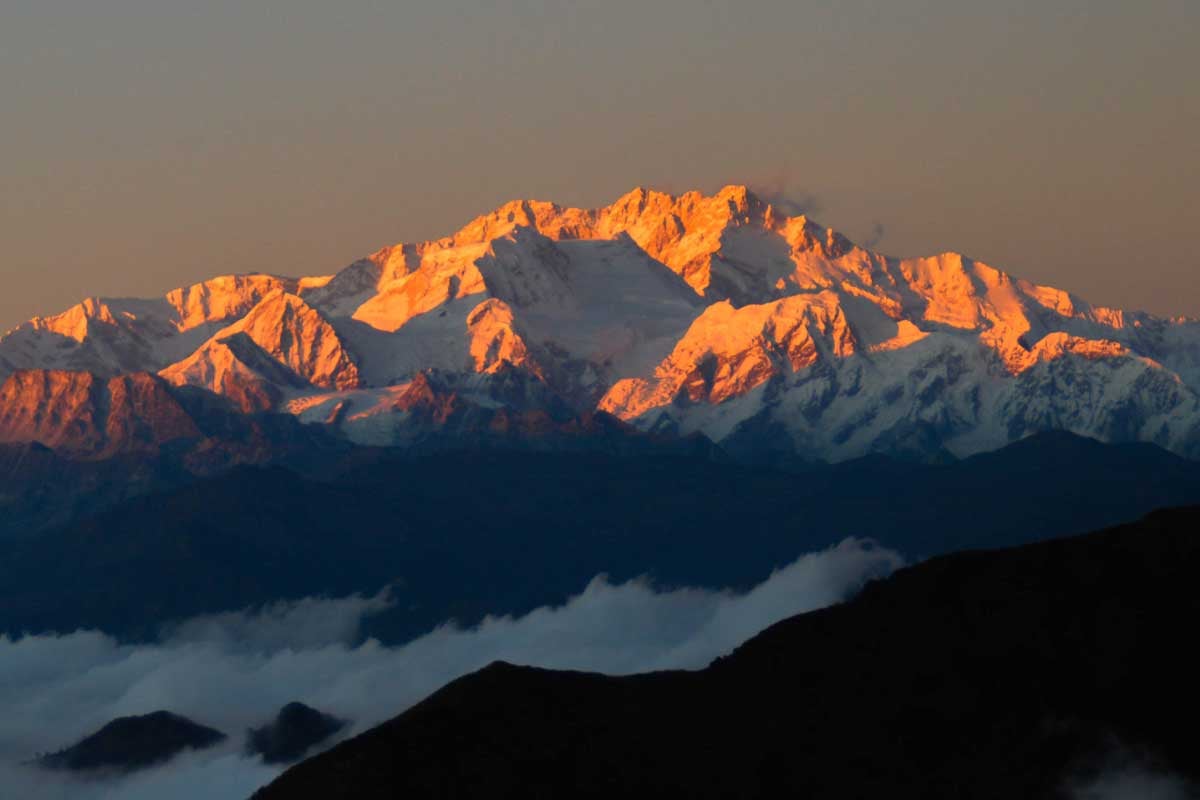
The trail winds through diverse terrain, from lush lower forests and traditional Limbu and Rai villages to high alpine landscapes near both the South and North Kanchenjunga Base Camps, offering close-up views of Kanchenjunga's massive glaciated face along with neighboring peaks. With its extended length, remote setting, and premium camping infrastructure, this trek is designed for experienced trekkers seeking an exclusive, deeply immersive Himalayan experience far from the more commercialized trekking circuits.
Highlights
Trek to both South and North Kanchenjunga Base Camps
Close-up views of Mount Kanchenjunga, the world's third-highest peak
One of Nepal's most remote and least-visited trekking regions
High-exclusivity camping-luxury setup throughout the trek
Walk through traditional Limbu and Rai villages
Diverse landscapes, from lush forests to high alpine terrain
Dedicated support crew providing quality meals and comfort at every stop
Genuine wilderness experience with minimal tourist traffic
Why Choose This Trek
Access to a rarely visited, high-exclusivity Himalayan region
Premium camping infrastructure ensures comfort despite the remote setting
Fewer trekkers than Everest or Annapurna region routes, offering true solitude
Dual base camp experience, covering both sides of Kanchenjunga
Rich cultural immersion in Limbu and Rai traditions
A strong choice for experienced trekkers seeking an exclusive, off-the-beaten-path journey
Price Starting From
Per person
Anil Bhandari
Trip Specialist
Itinerary
Day 1: Arrival in Kathmandu
expand_more
Day 1: Arrival in Kathmandu
Your journey begins with arrival in Kathmandu, where you'll be transferred to your hotel and welcomed by your guide. Given the extended length and remote nature of this trek, the evening briefing is especially detailed, covering permits, gear, the camping setup, and what to expect over the coming weeks.
Day 2: Fly from Kathmandu to Bhadrapur, Drive to Taplejung
expand_more
Day 2: Fly from Kathmandu to Bhadrapur, Drive to Taplejung
An early flight takes you to Bhadrapur in eastern Nepal, followed by a long scenic drive into the hills toward Taplejung, the gateway town for the Kanchenjunga region. The drive passes through tea gardens, terraced farmland, and small towns, offering a first glimpse of eastern Nepal's distinct landscape and culture.
Day 3: Drive/Trek from Taplejung to Mitlung
expand_more
Day 3: Drive/Trek from Taplejung to Mitlung
The trek begins as you leave Taplejung, either driving a short distance or starting directly on foot toward Mitlung, a small village along the Tamor River. The trail follows the river valley, passing through forested hillsides and terraced fields, with your camping crew setting up the first proper camp of the trek.
Day 4: Trek from Mitlung to Chirwa
expand_more
Day 4: Trek from Mitlung to Chirwa
Continuing along the river, the trail climbs gradually through forest and small settlements, with suspension bridges crossing tributary streams along the way. Reaching Chirwa, you'll notice the terrain beginning to feel more remote, with fewer signs of development compared to the trailhead.
Day 5: Trek from Chirwa to Sekathum
expand_more
Day 5: Trek from Chirwa to Sekathum
The trail continues deeper into the valley, with the Tamor River giving way to the smaller Ghunsa Khola as you approach Sekathum. Dense forest and steep hillsides define this stretch, with your camping crew maintaining a consistent standard of comfort despite the increasingly remote setting.
Day 6: Trek from Sekathum to Amjilosa
expand_more
Day 6: Trek from Sekathum to Amjilosa
A steep climb through dense forest brings you to Amjilosa, a small settlement perched on a hillside. The trail here is more demanding, with the elevation gain becoming noticeable for the first time, marking the transition into the higher sections of the Kanchenjunga region.
Day 7: Trek from Amjilosa to Gyabla
expand_more
Day 7: Trek from Amjilosa to Gyabla
The trail continues climbing through forested terrain, with the vegetation gradually shifting toward alpine species as elevation increases. Reaching Gyabla, you'll notice the first strong signs of Tibetan Buddhist culture, with prayer flags and chortens appearing more frequently along the trail.
Day 8: Trek from Gyabla to Ghunsa
expand_more
Day 8: Trek from Gyabla to Ghunsa
Today's trek brings you to Ghunsa, one of the larger and more significant villages in the region, known for its well-preserved traditional architecture and strong Tibetan cultural identity. Ghunsa also serves as a key acclimatization stop ahead of the higher camps.
Day 9: Acclimatization Day in Ghunsa
expand_more
Day 9: Acclimatization Day in Ghunsa
A full acclimatization day is scheduled in Ghunsa, with an optional short hike to a nearby viewpoint or monastery for improved altitude adjustment. This is also a good opportunity to rest, explore the village, and prepare for the demanding stretch toward the base camps ahead.
Day 10: Trek from Ghunsa to Khambachen
expand_more
Day 10: Trek from Ghunsa to Khambachen
The trail continues upward through increasingly open, high-altitude terrain, with dramatic views of the surrounding peaks beginning to unfold. Reaching Khambachen, the landscape feels distinctly alpine, with glaciers and rocky ridgelines dominating the skyline.
Day 11: Acclimatization Day in Khambachen
expand_more
Day 11: Acclimatization Day in Khambachen
A second acclimatization day is built in at Khambachen, given the significant altitude gain ahead. An optional hike to a nearby viewpoint offers additional acclimatization benefits along with sweeping views of the Jannu and Kanchenjunga massifs.
Day 12: Trek from Khambachen to Lhonak
expand_more
Day 12: Trek from Khambachen to Lhonak
The trail crosses increasingly rugged, high-altitude terrain as you approach Lhonak, a remote camp close to the base of Kanchenjunga's northern glaciers. The scenery here is stark and dramatic, with glacial moraines and towering peaks surrounding the camp on all sides.
Day 13: Day Trip to Kanchenjunga North Base Camp
expand_more
Day 13: Day Trip to Kanchenjunga North Base Camp
On this dedicated day, you hike to Kanchenjunga North Base Camp, where you can enjoy an up-close view of the mountain's massive northern face and surrounding glaciers. After soaking in the views, you'll return to Lhonak for the night, having reached one of the trek's two major highlights.
Day 14: Trek from Lhonak back Toward Ghunsa
expand_more
Day 14: Trek from Lhonak back Toward Ghunsa
With the North Base Camp behind you, the trek begins its return journey, retracing the trail back through Khambachen toward Ghunsa. This day allows for reflection on the remote, high-altitude terrain covered over the past several days.
Day 15: Trek/Drive Back Toward Taplejung
expand_more
Day 15: Trek/Drive Back Toward Taplejung
The journey continues back down through the valley, following the trail (and eventually the road) back toward Taplejung, marking the transition out of the remote Kanchenjunga region and back toward more accessible terrain.
Day 16: Fly Back to Kathmandu / Departure
expand_more
Day 16: Fly Back to Kathmandu / Departure
A flight from Bhadrapur brings you back to Kathmandu, where your journey concludes with a transfer to the international airport for your onward flight, bringing the Kanchenjunga Luxury Base Camp Trek to a close.
Are you looking to customize the trip itinerary?
If the provided schedule is not suitable for you, we can create a personalized travel arrangement tailored to your preferences and requirements.
Cost Details
What's Included
Airport pickup and drop-off in Kathmandu
Domestic flights: Kathmandu–Bhadrapur–Kathmandu
Drive from Bhadrapur to Taplejung and back
Hotel accommodation in Kathmandu (before and after the trek)
High-exclusivity camping accommodation throughout the trek
All meals during the trek (breakfast, lunch, and dinner), freshly prepared by a dedicated cooking crew
Experienced, licensed trekking guide
Full support crew, including porters, camp staff, and cooks
Kanchenjunga Restricted Area Permit (RAP)
Kanchenjunga Conservation Area Permit (KCAP)
All government and local taxes
Comprehensive first-aid kit carried by the guide
What's Excluded
International airfare to and from Nepal
Nepal entry visa fees
Travel insurance, including high-altitude and evacuation coverage
Personal expenses (phone calls, laundry, Wi-Fi, etc.), Tips for guide, porters, and camping crew
Extra costs due to flight delays, cancellations, or weather-related changes
Personal trekking gear and equipment
Upcoming Departures
Choose between joining a scheduled group or planning a private, personalized journey for your group.
Useful Information
Accommodation
Accommodation on the Kanchenjunga Luxury Base Camp Trek relies almost entirely on a high-exclusivity camping-luxury setup, given the limited teahouse infrastructure across much of the route. A dedicated support crew sets up quality tents, proper bedding, and comfortable dining and sleeping arrangements at each camp, ensuring a consistent standard of comfort even in the most remote stretches near Khambachen and Lhonak. In Kathmandu, you'll stay in a well-rated hotel before and after the trek, while towns like Taplejung offer basic but comfortable lodging during the transitional days at the start and end of the journey.
Food
A dedicated cooking crew freshly prepares meals throughout the trek, ensuring quality and variety despite the remote setting. Expect a mix of local Nepali dishes like dal bhat, along with hearty options such as soups, pasta, and eggs prepared fresh at camp each day. Given the extended duration and high-altitude sections of this trek, meals are designed to provide sustained energy throughout the journey. Hot drinks, including ginger and masala tea, are served regularly, particularly useful in the colder camps near Khambachen and Lhonak.
Best Time to Visit
The best time for the Kanchenjunga Base Camp trek is during the spring season, from March to May, and the autumn season, from September to November. Both offer the most stable weather conditions for this remote, high-altitude region, which is especially important given the trek's reliance on camping infrastructure. Spring brings blooming rhododendrons in the lower forested sections, while autumn typically provides the clearest views of Kanchenjunga and the surrounding peaks.
Visa
Most travelers can obtain a Nepal visa on arrival at Tribhuvan International Airport in Kathmandu. You'll need a passport valid for at least six months, a passport-sized photo, and the visa fee, payable in cash or by card. Visa durations of 15, 30, or 90 days are available, with extensions possible in Kathmandu if needed.
Travel Insurance
Travel insurance is required for this trek, and it must cover high-altitude trekking up to at least 5,500 meters, along with emergency helicopter evacuation. Given the extreme remoteness of the Kanchenjunga region and the distance from medical facilities, it's essential to confirm your policy includes comprehensive evacuation coverage for this specific route.
Permits
Kanchenjunga Restricted Area Permit (RAP), required for the core section of the route
Kanchenjunga Conservation Area Permit (KCAP)
Travelers typically need to trek as part of a group of at least two, per restricted area regulations
All permits are usually arranged by your trekking agency well in advance, given the region's remote status
Altitude and Health
Maximum altitude reached is near Kanchenjunga North Base Camp, at extreme high altitude
Altitude sickness is a serious consideration given the extended time spent above 4,000 meters
Two dedicated acclimatization days, in Ghunsa and Khambachen, help the body adjust gradually
Staying hydrated, ascending slowly, and monitoring for symptoms like headaches or nausea are essential throughout
Guides are trained to recognize signs of acute mountain sickness (AMS) and coordinate evacuation if needed
Given the trek's remoteness, travelers should be in strong overall health and consult a doctor before booking
Packing List
Warm, insulated jacket (down recommended)
Waterproof and windproof outer shell
Multiple fleece or thermal layers
Trekking pants and moisture-wicking shirts
Sturdy, broken-in trekking boots
Warm hat, sun hat, and gloves (including heavier gloves for high camps)
Sunglasses with UV protection
Headlamp with extra batteries
Trekking poles
Sleeping bag rated for sub-zero temperatures
Sleeping mat (often provided, confirm with operator)
Water bottles or hydration bladder
Water purification tablets or filter
Comprehensive first-aid kit and personal medications
Diamox (for altitude, consult your doctor)
Sunscreen and lip balm with SPF
Basic toiletries and quick-dry towel
Power bank and universal adapter (limited charging access on this route)
Daypack for daily essentials
Cash in Nepali rupees for personal expenses (no ATMs beyond Taplejung)
Frequently Asked Questions
Quick answers to the questions travelers ask most about Kanchenjunga Luxury Base Camp Trek: 16 Days.